European context: how SEFOC aligns with the EU Digital Education Action Plan
Published on 28 May 2026
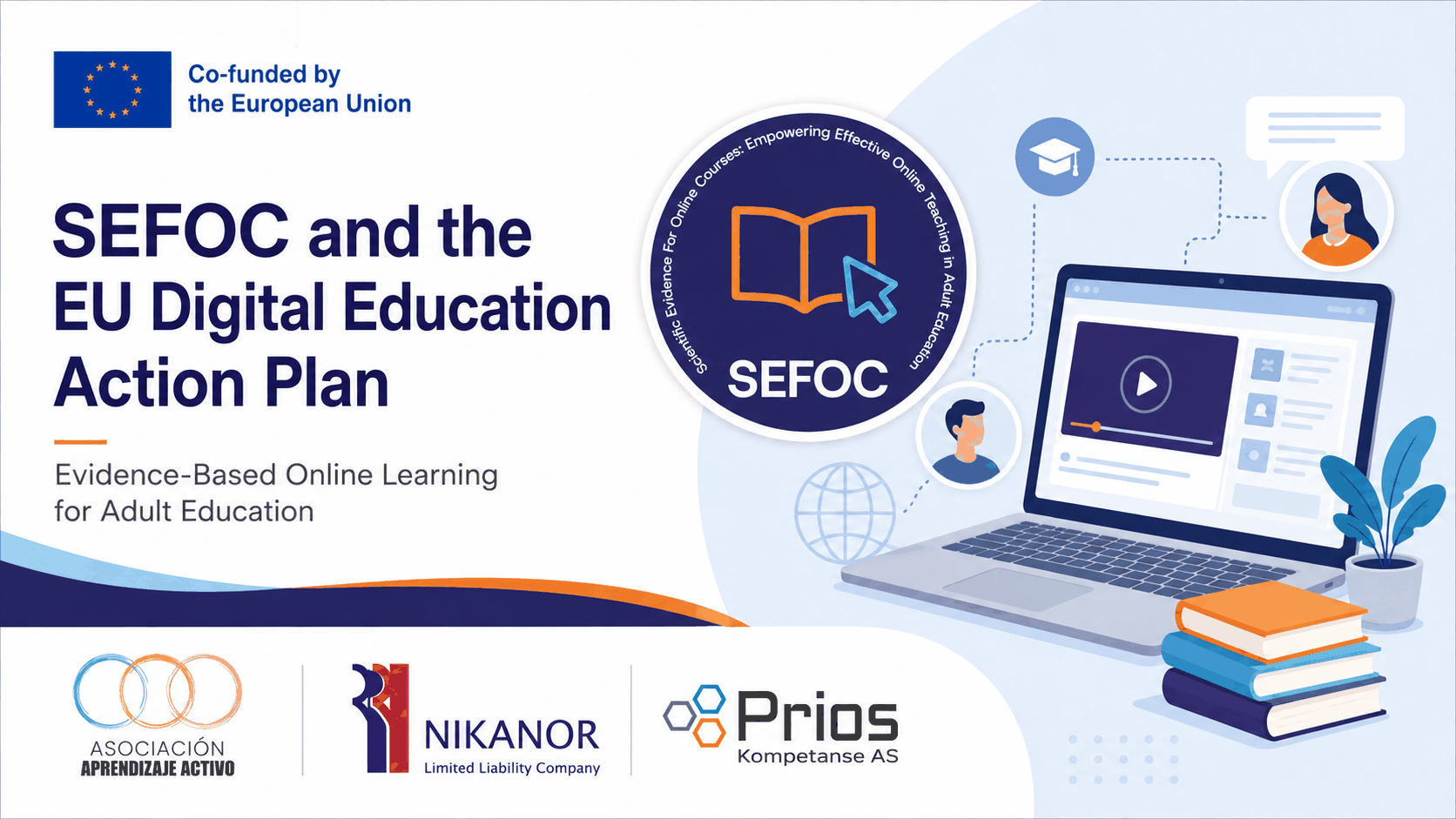
At a time when the digital transformation of education is a strategic priority for Europe, our Erasmus+ project SEFOC (Scientific Evidence For Online Courses) fits perfectly within the policy framework set out by the European Union's Digital Education Action Plan (2021-2027). In this first post on our news blog, we want to explain why SEFOC is not only a pedagogical project, but also a concrete response to the challenges posed by the European digital agenda.
What is the EU Digital Education Action Plan?
The Digital Education Action Plan (DEAP) is the European Commission's policy framework to support high-quality, inclusive educational transformation in the digital age. It sets out two strategic priorities: fostering the development of a high-performing digital education ecosystem and enhancing digital skills and competences for the digital transformation.
The plan recognises that the COVID-19 pandemic accelerated the use of digital technologies in teaching and learning, highlighting both the opportunities and the existing gaps. In this context, training teachers in effective, evidence-based online methodologies has become an urgent need.
The SEFOC project: science at the service of online training
SEFOC is a small-scale Erasmus+ partnership in adult education, coordinated by Active Learning Association (Madrid, Spain) and developed together with partners from Bulgaria (Nikanor Ltd) and Norway (Prios Kompetanse AS). Its official reference is 2025-1-ES01-KA210-ADU-000352208 and it runs from December 2025 to July 2027, with a European grant of €60,000.
The main aim of SEFOC is to equip trainers in non-formal adult education with scientifically grounded tools and strategies to design and deliver interactive and effective online courses. To this end, the project will develop an Evidence-Based Online Training Guide, deliver training sessions for adult educators and support the practical implementation of research-based strategies.
How does SEFOC align with the DEAP?
The connection between SEFOC and the Digital Education Action Plan is clear and direct in several key respects:
1. Teacher training in digital competences: One of the pillars of the DEAP is improving teachers' digital competences. SEFOC addresses exactly this, helping adult trainers master the design and delivery of high-quality online courses.
2. Evidence-based teaching and learning: The DEAP promotes the use of data and research to improve educational outcomes. SEFOC stands out precisely because all its strategies are grounded in scientific evidence, not in pedagogical fads.
3. Inclusion and accessibility in online learning: The European plan insists that digital education must be inclusive. SEFOC explicitly integrates inclusiveness and accessibility criteria into its training guide.
4. Lifelong learning: The DEAP supports learning throughout life. By focusing on non-formal adult education, SEFOC contributes directly to this goal.
5. European cooperation: With partners in Spain, Bulgaria and Norway, SEFOC is an example of the transnational cooperation promoted by the Erasmus+ programme and by the DEAP itself.
Why does this project matter to our association?
At Active Learning Association, we firmly believe that education should be grounded in science. Coordinating SEFOC allows us to take our mission to the European level: to show that when trainers apply what research tells us about how we learn, results improve significantly.
This project also strengthens our position within the Erasmus+ ecosystem and connects us with organisations committed to educational innovation in Europe. Every week we will keep you posted on how SEFOC and the rest of our projects are progressing.
Want to know more about SEFOC? You can check the project's official page on the Erasmus+ Project Results Platform or follow us on social media to stay up to date with all the news.